WASHINGTON D.C.
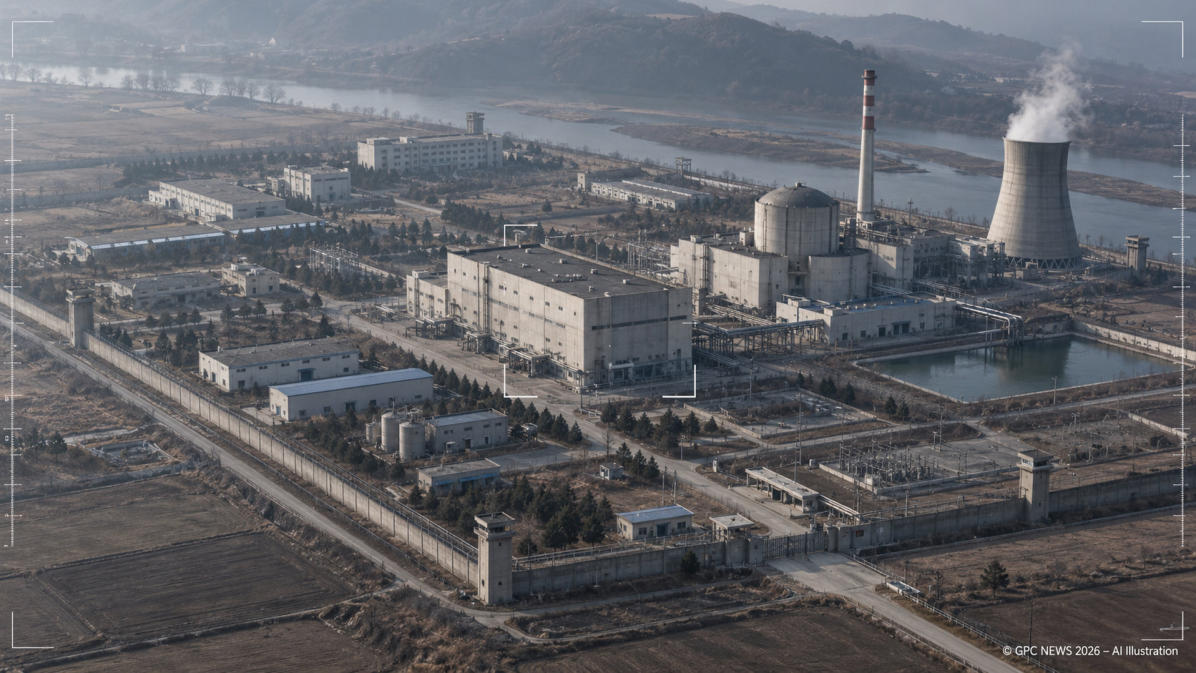
Global Press Connect provides independent news and analysis on international  politics, the economy, and humanitarian developments. © 2026 GlobalPressConnect | GPC.NEWS Founded and operated by Simone Mayer & Helping Hands for Children Foundation Inc. | Los Angeles, California, USA GlobalPressConnect (GPC.NEWS) is an independent international news organization dedicated to delivering accurate, impartial, and timely journalism. Our mission is to provide verified reporting, editorial integrity, and in-depth coverage of global affairs, politics, business, financial markets, technology & AI, entertainment, humanitarian issues, weather, and breaking news. All Rights Reserved. NORTH KOREA EXPANDS URANIUM ENRICHMENT AT YONGBYON, IAEA SAYS    VIENNA / SEOUL, September 9, 2026 — North Korea has constructed a new uranium-enrichment facility at its Yongbyon nuclear complex, according to the International Atomic Energy Agency, raising fresh concerns about Pyongyang’s expanding nuclear-weapons program. The two-story building appears capable of housing as many as 28 centrifuge cascades, the IAEA said after examining satellite imagery and photographs released by North Korean state media. Centrifuges are used to enrich uranium by increasing the concentration of the isotope uranium-235. At lower enrichment levels, uranium can be used as fuel for civilian nuclear reactors. When enriched to much higher levels, however, it can provide material for nuclear weapons. The IAEA has not had inspectors inside North Korea since 2009, forcing the agency to monitor the country’s nuclear activities remotely. Analysts rely on commercial satellite imagery, construction patterns, heat signatures and images published by Pyongyang to assess developments at restricted facilities. The new Yongbyon building reportedly contains space for centrifuge equipment on both floors. If fully operational, it could substantially increase North Korea’s capacity to produce highly enriched uranium.  Activity has also expanded at an annex of the Kangson enrichment complex near Pyongyang. The site, which is believed to supplement operations at Yongbyon, has long been examined by international nuclear experts as a possible center for uranium enrichment. The IAEA described the developments as deeply concerning and said they demonstrate that North Korea continues to enlarge its nuclear infrastructure in defiance of United Nations Security Council resolutions. Pyongyang withdrew from the Nuclear Non-Proliferation Treaty and has repeatedly declared that its status as a nuclear-armed country is irreversible. North Korean officials reject the authority of the IAEA and argue that the country’s weapons program is necessary to deter foreign military threats. The expansion comes as diplomatic efforts to limit North Korea’s nuclear arsenal remain stalled. Previous negotiations focused on the closure or dismantling of facilities at Yongbyon in exchange for sanctions relief and security guarantees, but the talks failed to produce a lasting agreement. North Korea has conducted multiple nuclear tests and developed ballistic missiles designed to carry nuclear warheads over increasingly long distances. The country’s ability to produce additional fissile material is therefore closely watched because it could determine how rapidly Pyongyang can expand its arsenal. Unlike plutonium production, which generally involves reactors and facilities that may produce visible operating signatures, uranium enrichment can be dispersed across smaller and less easily detected sites. This makes it difficult for outside observers to calculate the size of North Korea’s nuclear stockpile or determine how many enrichment facilities may be operating.  The latest findings suggest that the nuclear program is not merely being maintained but actively expanded. Without inspectors on the ground, however, the precise status of the new building and the number of operating centrifuges cannot be independently confirmed. The IAEA has renewed its call for North Korea to comply with international obligations and allow inspectors to return. For now, the agency must continue watching from a distance as Pyongyang adds new capacity to one of the world’s most secretive nuclear programs.  © 2026 GPC.NEWS — GlobalPressConnect
GLOBAL